De kranten
De Standaard en
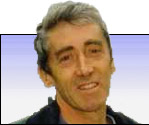
The International Herald Tribune schrijven dat de Belgische senator Paul De Grauwe de enige kandidaat is voor de functie van ondervoorzitter van de Europese Centrale Bank. De Grauwe is geen grijze muis in de Belgische politiek. In 1984, lang voor hij VLD-senator werd, maakte hij als
universiteitsprofessor een wetenschappelijke studie die op basis van gegevens uit de periode 1960-1983 aantoonde dat de belastingen meer stegen als de liberalen in de regering zaten, dan wanneer ze in de oppositie zaten. Ook toen hij al senator was, schreef hij enkele gedurfde artikels waarin hij zijn twijfels uitte over de invoering van de euro. Momenteel pleit De Grauwe voor het versoepelen van het stabiliteitspact. Het ziet er dus naar uit dat Paul
zijn weblog niet meer zal bijwerken...



 Artikels
Reacties
David Vercaemst
dinsdag, 4 februari, 2003 - 01:43ECB Watch: Last Yr's Underdog Has Board Bid Edge
By Charlene Lee
Of DOW JONES NEWSWIRES
FRANKFURT -- Last year, Paul de Grauwe was the underdog. This year, the outsider may have an edge in his bid to win a place on the European Central Bank's Executive Board.
Belgium had practically no support from the other 11 euro-zone member states when it first pitched de Grauwe last year. It had pitted a candidate with no central banking experience against one of Europe's most respected central bankers, Lucas Papademos.
And instead of withdrawing early as other countries had done, Belgian Finance Minister Didier Reynders fought down to the wire, irking many of his E.U. counterparts in the process.
The Belgian government decided earlier this week to defy conventional wisdom and nominate de Grauwe again. Observers see only limited political fallout if he doesn't win a seat on the prestigious six-member board, and many are applauding Belgium's insistence on backing the academic and member of the Belgian senate over its own central bankers.
"The merits are clearly that you have a fresh view on certain topics," said Fortis Bank economist Elwin de Groot.
Belgium last year put up de Grauwe for the ECB vice presidency against Papademos, the heavily favored Greek central bank governor whose hefty resume included a stint as senior economist at the Federal Reserve Bank of Boston.
Reynders pressed for de Grauwe to the end, even abstaining from the vote to approve Papademos at a contentious meeting of European Union finance ministers last April. The finance minister also tried unsuccessfully to secure the right for Belgium to appoint the next board vacancy in 2003.
Afterwards, Reynders railed against a system that was effectively shutting out those who aren't members of the central-banking club.
This year, both the presidency and a board seat need to be filled. France has a lock on naming the successor to President Wim Duisenberg when he retires in July.
That leaves the board seat being vacated at the end of May by Sirkka Hamalainen, a Finn, as the inevitable battleground for the national bickering that has come to characterize E.U. politics. Belgium , Austria, Ireland, Portugal and Luxembourg have yet to put a national on the ECB board.
A Wider Spectrum Of Views
So, far de Grauwe is the only ECB candidate declared by a government, although Austria has indicated it intends to name one soon.
Most observers expect that to be Gertrude Tumpel-Gugerell, deputy governor of Austria's central bank and a career central banker. She's also a woman, which could give her an advantage because Hamalainen's the only woman on the 18-strong Governing Council - composed of the 12 national central bank heads plus the Executive Board.
But diversity of experience could be just as important to the Governing Council, which sets interest rates.
"Do they want someone who thinks more freely in there, or someone who's a team player? That's a judgment the politicians have to make," said Daniel Gross, director of the Centre for European Policy Studies, a Brussels-based think tank.
Many ECB watchers say having policymakers with experience in business, finance and academia would give the decision-making process a contest that's less ivory tower and more real world. That's one of de Grauwe's major selling points.
"That's the most important thing: Let's open it up to outsiders, so there will be a wider spectrum of views within the ECB," de Grauwe said.
Some of de Grauwe's outspoken criticism of the ECB may, however, work against him.
The ECB, as a relatively young institution, is rather touchy about its credibility. One of its biggest problems from the outset was speaking with a single voice. Only in the past year or so has the ECB improved the consistency and clarity of its communications.
De Grauwe, 56 and an economics professor at Katholieke Universiteit Leuven, co-wrote a December report by the Centre for Economic Policy Research criticizing the ECB for being too slow to cut interest rates last year.
The Belgian candidate is also in favor of a less restrictive inflation objective than the current 2% targeted ceiling. He'd rather see a more symmetrical inflation target centered on 2% that tolerates a slightly higher or lower inflation rate.
David Vercaemst
dinsdag, 4 februari, 2003 - 01:43Critic Would Become "Team Player"
"It's not an extremely different view. It's not revolutionary," de Grauwe told Dow Jones Newswires. "I'm sure wihin the ECB there are quite a lot of people who think similarly."
While tinkering with the inflation objective may sound radical, it would simply put down on paper what has effectively been recent ECB practice. Euro-zone inflation has averaged above 2% the last three years, but that hasn't stopped a rate-cutting cycle that began in May 2001, with the most recent easing in December.
De Grauwe, whose outspoken views aren't unusual for an academic, also tries to dispel fears he might become a loose cannon once on the ECB board.
"Once you are on the team, you should be a team player," de Grauwe insisted. While he would argue his position at Governing Council meetings, he would back whatever decisions are taken.
"I'm sure this is going on within the Governing Council today. I can't imagine they are all sitting around the table with the same opinion," de Grauwe said. "I would be a fool if once I were there, I start fighting the decisions afterwards and say I don't agree. I would be foolish and certainly don't intend to do that."
His views on the ECB's first pillar of monetary policy - the one that assigns a prominent role to M3 money supply in the rate-setting process - are less controversial. De Grauwe is among the majority of economists arguing for the first pillar to be dropped, largely because the monetary aggregates are no longer considered a reliable leading inflation indicator.
"Nobody will argue that we shouldn't look at money growth," he said. "Once in a while (the ECB) takes money growth seriously, but most of the time it doesn't take it seriously. So stop pretending it's something special."
The ECB has said it will review its monetary policy strategy, including the M3 pillar and the 2% targeted inflation ceiling, in the first half of 2003.
The fact that he was unsuccessful last time might not damage de Grauwe's chances this time. In fact, say some observers, the media exposure from last year could even help. And they downplay any possible political fallout for Belgium .
"When you put him up for the second time, it doesn't necessarily mean a real political risk. It means you're really determined to get him in," said Peter de Keyzer, chief economist at KBC Asset Management in Brussels.
He noted that France keeps pushing Bank of France Governor Jean-Claude Trichet to succeed ECB President Wim Duisenberg despite Trichet's involvement in the Credit Lyonnais scandal - and that hasn't damaged France's claim to name the next president.
Updated February 3, 2003 1:45 a.m. EST