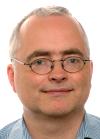
Luc Van Braekel
Nokia E51 aan het uitpakken waarmee ik drie maanden lang #cherrybeta mag uitproberen http://becherry.be
Wat is dit?Deze korte mededeling werd ingegeven via Twitter en wordt hier ter informatie getoond. Reacties kunnen enkel via Twitter of op mijn Facebook-wall worden ingegeven en zullen niet op deze blog worden getoond. Reacties op deze tweet die als commentaren bij artikels worden geplaatst, zullen worden geschrapt voor zover ze off-topic zijn bij het artikel.

Britain bans US talk radio host

Michael Savage, the number three most popular talk radio host in the US with a weekly reach of 10 million listeners, has been banned from entering the UK. Not that he wanted to visit the UK, but his name is on a list of 16 unwanted people, including radical muslim clerics, neonazi's, white supremacists, murderers and terrorists. Jacqui Smith, the British Home Secretary, explains the decision:

"This is someone who has fallen into the category of fomenting hatred, of such extreme views and expressing them in such a way that it is actually likely to cause inter-community tension or even violence if that person were allowed into the country."

[Continue reading: Britain bans US talk radio host]

Drupal at Fosdem 2009 - videos


Here are my videos of 7 Drupal-related presentations from yesterday's Fosdem devroom sessions in Brussels.
[Continue reading: Drupal at Fosdem 2009 - videos]

Speed saved the lives of flight US1549


An Airbus A320 had to make an emergency landing on the Hudson river right between Manhattan and Jersey City on Thursday. This video from a surveillance camera of the US Coast Guard shows how remarkably fast everything happened.
  • At 3:31:02 PM we see the plane appear in a cloud of splashing water, left in the picture.
  • At 3:31:11 PM the plane seems to have lost most of its speed. It seems to be drifting off slightly to the left.
  • At 3:31:36 PM the camera zooms in on the plane. We see people standing on the right wing.
  • At 3:31:48 PM the front door on the right side opens.
  • At 3:31:47 PM we see people sitting in a raft attached to the front door on the left.
  • At 3:31:48 PM we see people appear on the left wing.
  • At 3:32:53 PM a ferry boat is moving in the direction of the plane.
  • At 3:33:05 PM we see how the plane is drifting with the currents at a relatively high speed.
  • At 3:35:13 PM the ferry makes physical contact with the right wing.
  • At 3:37:39 PM a second ferry makes physical contact with the left wing.

FEMA declares Obama inauguration a "disaster"


FEMA declares Obama inauguration a "disaster". But it's not what you think...

Blogboat 1.0

Blogboat

Last Sunday, citizen journalism guru Dan Gillmor was in Belgium for the Blogboat 1.0 event organized by Chips vzw. In the afternoon there was a discussion with bloggers, citizen journalists and media professionals. I made a some pictures and videos which you may find interesting.

[Continue reading: Blogboat 1.0]

Dan Gillmor defends Sarah Palin against anonymous cowards

Anonymous sources in the McCain-Palin campaign have accused Sarah Palin of not knowing that Africa is a continent, not a country, according to Carl Cameron on Fox News. Sarah Palin reacted by denouncing these anonymous sources as "immature" and "jerks". Dan Gillmor, a guru of citizen journalism, took the defense of Palin at a conference in Ghent, Belgium. Anonymous accusations have no credibility, he said.


Now I'm not a fan of Sarah Palin. I'll start with that. But the things that they have been saying, they have been doing anonymously. They won't attach their own names to the things they're saying. So, let's consider this: this is a campaign that did almost nothing but lie during the campaign anyway. That's an exaggeration, but the McCain campaign lied a lot. And suddenly we're supposed to believe them because they're saying something terrible about Sarah Palin? I don't think so! And especially when they're doing it anonymously. She's right that these people are cowards. She's absolutely right about that. It doesn't mean what they're saying is false, but I don't believe it. I refuse to believe it, because these people don't have enough courage to say "yes I'm saying this" and say who they are. I would not trust these people for a second. So I'm absolutely with her on this issue.

Watch the video, where Gillmor continues by telling in which cases anonimity could be necessary.

Security and privacy in Internet Explorer 8

Internet Explorer 8, which is currently in beta, will have some important enhancements in terms of security and privacy. Craig Spiezle, Director of Security and Privacy for Internet Explorer Product Management at Microsoft, was in Brussels last week to present the new features and to answer questions. IE8 will have a special "InPrivate Browsing" mode which will leave no traces on the local computer, and an "InPrivate Blocking" mode which blocks suspicious third party content on a web page. Both features will be optional though and will not be "on" by default. More details are in the video I took from Craig's talk. An excellent textual summary of the presentation can be found in Dutch at the BVLG blog.

Democracy is a legal obligation

The Comprehensive Guide to International Law by Marc Cogen
If you want to drill for oil at the North Pole, build an artificial island in the Pacific Ocean, provide telecommunication services from a balloon in the stratosphere, or if you are just looking for a second citizenship, you may need this new book by professor Marc Cogen: "The Comprehensive Guide to International Law". Probably, you will need a lawyer too, but this book is written for non-lawyers who are interested in international relations and in the impact of international law in daily life. Professor Marc Cogen explains how the state and international law came into being, what the role of states, diplomacy, treaties and international organizations is in international law, what "the global commons" are, and how international law impacts the life of individuals and the way in which wars are fought.

The book was presented last Wednesday in Brussels. In his speech, professor Cogen explained how the current vision on international law makes democracy not just an option, but a legal obligation for states. He also said that Zimbabwe is one of the test cases for the international enforcement of this obligation.
Current opinio juris considers democracy not as an option but as a legal obligation. This does not mean that undemocratic regimes became the immediate object of a military operation. But it exposes these regimes to sanctioning, blaming and, if necessary and as a last resort, to international intervention.

One of the ongoing test cases is Zimbabwe. Its regime has been under sanctions by Europe and the U.S. although the UN Security Council has not imposed sanctions because African states were against it. However, Africa’s commitment to democracy and human rights are at stake here. If the African Union or a sub-regional organization such as the SADC cannot produce regime change in Harare, then the UN or the some important players in the international community will take over the leadership on this issue. Zimbabwe is a test to see if African states really live up to their African agreements such as the African Union Charter.

In the case of Somalia and Sudan/Darfur we have seen recently that African states were not successful in organizing and maintaining troops. Finally these questions were passed over to the UN Security Council which devised a hybrid structure of peace-keeping.

Democracy is firmly rooted in the human rights doctrine: free and fair elections, freedom of association, and freedom of expression. These three rights together are the minimal yardstick. And the most difficult right to uphold is the freedom of expression which proceeds the outcome of elections. I hope that we can undertake more research on democracy in the world.

The above is the official written version of his speech. If you watch this video you will discover some additional statements and comments by professor Cogen on this matter.


Beijing Olympics: country rankings

As the Beijing Olympics come to a close, it is interesting to rank the participating countries. But not in total medals per country, but in medals per participating athlete per country and medals per million inhabitants per country. 87 countries have won medals in these olympics. This brings us to the following two tables.
[Continue reading: Beijing Olympics: country rankings]

10 things to do when you're in Iceland

I had a wonderful week in Iceland, visiting natural wonders and discovering new experiences like whale watching and swimming in the geothermal blue lagoon. To cut a long story short, here's my list of ten things to do in Iceland, of which I already did eight.

1. Geyser watching

The big geyser Geysir has gone silent, but his nearby brother Strokkur is erupting about every five minutes.


2. Whale watching

Take a three hour whale watching trip and you will see big humpback whales, smaller Minke whales and dolphins.

VIDEO
[Continue reading: 10 things to do when you're in Iceland]

Success through creative swarming and coolhunting

I was at the iAOC conference in Reykjavik this week. The keynote speech was given by Peter Gloor, a Swiss researcher at MIT. With social networks and Web 2.0 gaining importance, his research and publications about the impact of swarming and collaboration on innovation are very relevant. He blogs and he has written books on swarm creativity and coolhunting.

In this hour-long video of his presentation, Peter Gloor explains why collaboration, networking, sharing, coolhunting and coolfarming can make the difference between success and failure in projects and business ventures. His talk is based on research using social networking analysis of e-mail correspondence and forum messages.

VIDEO

There are excellent summaries by Steve Lubetkin of the other sessions of the conference at the Philadelphia PRSA blog, and a transcript of the liveblogging at Philippe Borremans' (the other Belgian participant at the conference) Blackline blog.

Steve Ballmer has a Facebook profile

Steve Ballmer was in Belgium today for a keynote speech at Microsoft Mix Essentials. Blogger Bruno Peeters of BVLG asked him if he had a Facebook profile.

[video]

Steve Ballmer: "I do have a profile on Facebook. If you actually look, there's about ten Steve Ballmer, and I'm only one of them! I'm the one that has a picture that actually looks like me. I'll tell you again, I'm hitting a golf ball. That's the real Steve Ballmer. So yes, I do have a site on Facebook. I will tell you, it's hard to keep up, I get many friends requests of people I don't know (...) We obviously value our partnership with Facebook, we provide advertising services and technological services to help sell over half of the advertising inventory in Facebook. (...) Nowadays I get as many new invitations from new friends networks. And I expect to see a lot of innovation. As the minister said: when you encourage inclubation you also encourage competition (...) and that's a great thing."

That was the important question. On less important matter, a journalist asked him if he was still confident on the Yahoo offer.

Steve Ballmer: "I'm very confident that we've offered a very good price. There's not much new to say than that it's a good price. If you let us know, if you don't let us know, maybe your shareholders will think it's a good price. I like what we're doing in this case, because everything we say privately we're also saying publicly. So there's not much new, I think, for me to say today."

Belgian streets named after US presidents

When Ronald Reagan died in June 2004, I wrote:
It's remarkable how in Europe streets, squares and tunnels are named after Democratic presidents (Kennedy tunnel in Antwerp, Avenue Franklin Roosevelt in Brussels, Clinton Park in Roeselare), but how reluctant local governments are to pay the same honor to Republican presidents. When, if ever, will there be a Ronald Reagan Square?

Yesterday I realized that I had all the necessary tools and information to prepare a small showcase. I have a list of all the street names in Belgium, I can semi-automatically filter those streets which are named after US presidents, I can distinguish between Democrats and Republicans, and I can display everything in a table:
[Continue reading: Belgian streets named after US presidents]

Video: writing for the web

Bram Souffreau, web editor at Concentra (publisher of newspapers Gazet van Antwerpen and Het Belang van Limburg), talked about "Writing for the web" at Barcamp Ghent. HIs presentation focuses on the writing style that bloggers and web publisher should use.

.be domain names are anonymous by default

In a remarkable move to protect the privacy of its customers, DNS Belgium (the administrator of the .be top level domain) is hiding the names and addresses of all private persons in its public WHOIS service. The only element that is made public of the owner (or "licensees" as they call them) is the email address, which can of course be chosen in such a way as not to divulge any name.


For organizations, the name, address, phone and fax numbers are still made public.
[Continue reading: .be domain names are anonymous by default]

ZatteVrienden and Drupal

During lunch break at today's Plugg conference I had the opportunity to talk with Cain Ransbottyn, founder and big boss of ZatteVrienden, a successful Belgian blog with a focus on entertainment, celebrities, virals and gossip. I asked him how ZatteVrienden uses Drupal and what kind of platform they use, so the video you will see has a highly technical content. By the way, Cain and Drupal founder Dries Buytaert are former classmates!


[this video is also available on YouTube]