
Web 2.0 is real
Web 1.0 was all about static content, one-to-many communication, and unidirectional e-commerce. The Web 1.0 bubble, better known as the dotcom bubble, bursted in 2000. Now, a new wave of internet applications is gaining strength. In Web 2.0 it's all about user participation, user generated content, and 'mashups', the mixing of content from other sources to present them in new and innovative forms, like on a map.
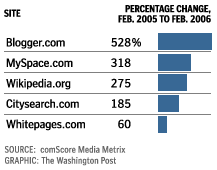
But in all seriousness, these data (see table on the right) from comScore MediaMetrix, published by the Washington Post, prove that Web 2.0 is real. Websites with user generated content, like Blogger.com, Wikipedia.org or MySpace.com are showing three-digit growth figures (in number of visitors) in the last year. And localized content, like Citysearch.com or Whitepages.com, is also growing fast. (hat tip)


RSS feeds
 Artikels
Populaire inhoud
Van vandaag:
- Albert wil niet dat Filip koning wordt
- Evolutieleer voor beginners
- Royal Leg Gone Astray
- Google's Girl Power
- Nota-Verhofstadt over de staatshervorming (ruwe OCR-versie)
- Kortrijkse duiven worden verwend
- Memorial Day in Waregem
- De Europese Obamamanie (2)
- Privacyverklaring
- FAQ over de Amerikaanse verkiezingsuitslag
Van altijd:
- Originele nieuwjaarswensen
- De beste foto's uit de shame-betoging
- Evolutieleer voor beginners
- Zomertijd, wintertijd en astronomische tijd
- Amerikaanse bedrijven vormen geen bedreiging voor een open internet
- 10 nieuwe uitvindingen die de wereld gaan veranderen
- Dubbele regenboog
- De TAC-test
- Werkloosheid wenkt voor belspeldellen
- Luchtfoto's van drie provincies online beschikbaar
Reacties
Bruno Lowagie
vrijdag, 21 april, 2006 - 16:17FYI:
http://traffic.alexa.com/gr...
Michel Vuijlsteke
vrijdag, 7 april, 2006 - 19:23Or another little known statistic: Flickr has about 9 million monthly unique visitors, Yahoo! Photos may be less sexy, but it does have around 30 million unique monthly visitors.
dries
donderdag, 6 april, 2006 - 17:16... not to mention the facebook, the 7th most visited site on the internet. myspace is crap compared to that.
Michel Vuijlsteke
donderdag, 6 april, 2006 - 12:23I’m not really sure why any of the mentioned sites all of a sudden get qualified as "web 2.0".
When the term was coined back in 2004 Google was touted as the quintessential Web 2.0 company. Now it looks as if the WaPo article has relegated it to he 1.0 crowd. Why not just admit that this whole 2.0 web thing is just a buzzword for "whatever the new hotness is"--podcasting in 2005, social networks in 2003, etc.?
And of course, as one of the commenters at Threadwatch rightly says: *of course* newer sites will tend to show more growth than established brands like Yahoo or Google, simply because there isn't that much room for those guys to grow any more.