
Climate relativism: adapt, don't mitigate
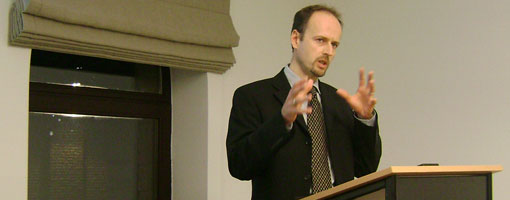
Johan Albrecht
On 11 December I attended a presentation by professor Johan Albrecht of Itinera Institute. He talked about "Climate relativism" which is also the title of the book (at this moment only available in Dutch) he wrote on climate change and its effects on the economy. His ideas on this matter can be summarized as follows:
- Scarcity of fossil fuel can create new opportunities for innovation.
- Radical innovations are coming in which CO2 is used as a resource (e.g. to promote algae growth).
- Adaptation to climate change is better than mitigation of our economic growth.
- The IPCC scenarios do not take into account the effects of this market-driven adaptation.
- Only entrepreneurship can provide us with the innovations which will be necessary to adapt to climate change.


RSS feeds
 Artikels
Populaire inhoud
Van vandaag:
- Etrusken kwamen uit Turkije
- Bij de "politieke" kersttoespraak van de koning
- Hondenterreur
- FAQ over de Amerikaanse verkiezingsuitslag
- Vette blunder in De Morgen, dikke pluim voor HLN
- Nomocratie, teleocratie, particratie en de vrije meningsuiting
- Politieke journalisten: sluiswachters of toneelmeesters?
- CD&V ten oorlog tegen palmolie en kokosvet
- De Hoge Gezondheidsraad over palmolie
- Privacyverklaring
Van altijd:
- Originele nieuwjaarswensen
- De beste foto's uit de shame-betoging
- Evolutieleer voor beginners
- Zomertijd, wintertijd en astronomische tijd
- Amerikaanse bedrijven vormen geen bedreiging voor een open internet
- 10 nieuwe uitvindingen die de wereld gaan veranderen
- Dubbele regenboog
- De TAC-test
- Werkloosheid wenkt voor belspeldellen
- Luchtfoto's van drie provincies online beschikbaar
Reacties
joe
zondag, 10 februari, 2008 - 23:03Pull it you not on, johan vandepopuliere. But your apology is much appreciated. You make me think of good ole Socrates. Do you grow hemlock in your garden? (Conium maculatum L.) Schol!
johan vandepopuliere
maandag, 21 januari, 2008 - 18:31(translation)
It may be typically Flemish to say so, but I remain unconvince by this exposé. I hope the book contains a little more than variations on the "little do I know" theme. A few remarks:
1. The central conjecture seems to be to invest in technologies which foster adaptation and to encourage entrepeneurship investing in this particular branch. The only specific example in the lecture is the deployment of irrigation. I'm left unserved with a vision on which direction the innovation should go. To say you do not know either sounds like a no brainer to me. I prefer Jules verne.
2. The mitigation policy being favoured because it would be more beneficial for Western companies, is a conjecture poorly argumented. Moreover if true, it does not match the vision to have entrepeneurship take the lead.
3. The part where investments in new energy sources is allegedly rendered futile by the pace at which China consumes fossile sources was unclear to me. I may have to listen to it again.
4. The plea to help the victims of climate change first is a noble one, but again it contradicts the principles of an entreprise, which will first of all look for a strong potential market.
5. It does not strike me as particularly novel to provide the insight that the industrial revolution was foremostly one of energy. Globalization too thrives on technological development, notably the advent of fibre optics for data transmission and the extreme popularization of mass long distance transport.
The future technological breakthrough affecting society in a major way, will be genetics. One can, somewhat "Vernally", foretell that we won't need mass shrimp transport any longer, once we have learnt to appreciate genetically changed, home grown (sea)food.
johan vandepopuliere
maandag, 21 januari, 2008 - 18:16I apologize for the inconvenience caused. I noticed the mistake after writing my comment. I'm used to commenting on this site in Dutch, in the Dutch section. After having read the article it didn't occur to me I was in the wrong section.
Apologies.
LVB
maandag, 21 januari, 2008 - 17:12"Ik mis een visie op welke richting die innovatie moet uitgaan", says mister Vandepopuliere, meaning that he deplores the fact that the presentation does not indicate any 'direction' for the innovation to proceed.
Well, I am glad that everything is left open as far as innovation is concerned. Market-driven innovation is, by definition, unguided by central planning. Guided innovation is by definition non-market-driven and as a consequence suboptimal in economic terms.
LVB
maandag, 21 januari, 2008 - 17:06As a matter of politeness to our readers, I would like to clarify that the comment above from a mister Vandepopuliere is written in Dutch. I would like to apologize to our non-Dutch-speaking readers for the fact that the comment is not in English, which would be the normal situation under an English article. Normally I would delete comments like that, but since mister Vandepopuliere seems to have spent a lot of time writing a Dutch comment under an English article, I have decided to keep the comment.
johan vandepopuliere
maandag, 21 januari, 2008 - 16:27Misschien typisch Vlaams om zoiets te zeggen maar ik vond dit niet bepaald overtuigend. Hopelijk bevat het boek wat meer dan variaties op "ik weet het ook niet". Enkele punten:
1. De centrale stelling lijkt te zijn: investeer in technologie die aanpassing bevordert. Moedig ondernemerschap aan dat in die branche investeert. Het enige concrete voorbeeld in de lezing is irrigatie en waterwerken in het algemeen. Ik mis een visie op welke richting die innovatie moet uitgaan. Zeggen dat je het niet weet, omdat ze 50 jaar geleden ook niet wisten waar we nu zouden staan, is een zwaktebod. Geef mij maar Jules Verne.
2. Dat de inperkingspolitiek (mitigation) nu voorrang krijgt omdat ze gunstiger is voor westerse bedrijven, is een weinig onderbouwde stelling, eerder een gissing. Bovendien, als het waar is, dan strookt ze niet met zijn advies om ondernemerschap het voortouw te laten nemen.
3. Ik begrijp ook helemaal niet waarom ondernemerschap in nieuwe energiebronnen negatief zou moeten zijn in het licht van de groeiende consumptie van fossiele brandstof in China. Een duistere passage die ik misschien nog eens moet beluisteren.
4. Het pleidooi om de slachtoffers van klimaatverandering eerst te helpen met aanpassingstechnologie is nobel, maar staat alweer haaks op de principes van een onderneming, die toch in de eerste plaats op zoek gaat naar een koopkrachtige afzetmarkt. Stelt hij een joint venture voor van overheidsbesteding en aanpassingstechnologie?
5. Dat de industriële revolutie vooral een energetische revolutie was, lijkt me geen verrassend inzicht. Ook de globalisering drijft op technologische ontwikkeling, met name van glasvezelkabels voor datatransmissie en de extreme popularisering van lange afstandstransport.
De volgende technologische revolutie zal er - mijn gissings - een zijn van genetica. De implicaties op de globale ethiek én economie zullen overweldigend zijn en de energievraagstukken naar de achtegrond verdringen. Om maar iets buitenissigs te zeggen: als een mens kan overleven op genetisch gemanipuleerd voedsel van eigen kweek, mogen de garnaaltransportschepen naar het museum.